Unwritten Rules: The Social Codes American Visitors Keep Breaking in Mardin (And How to Finally Get Them Right)
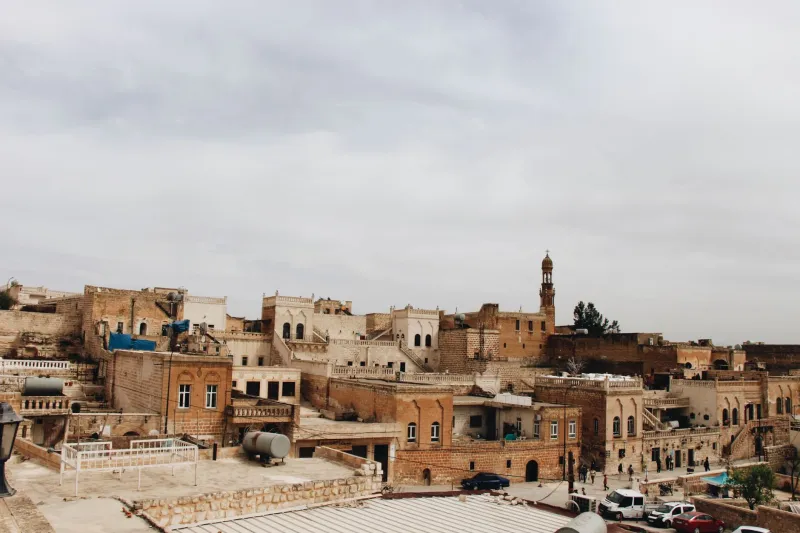
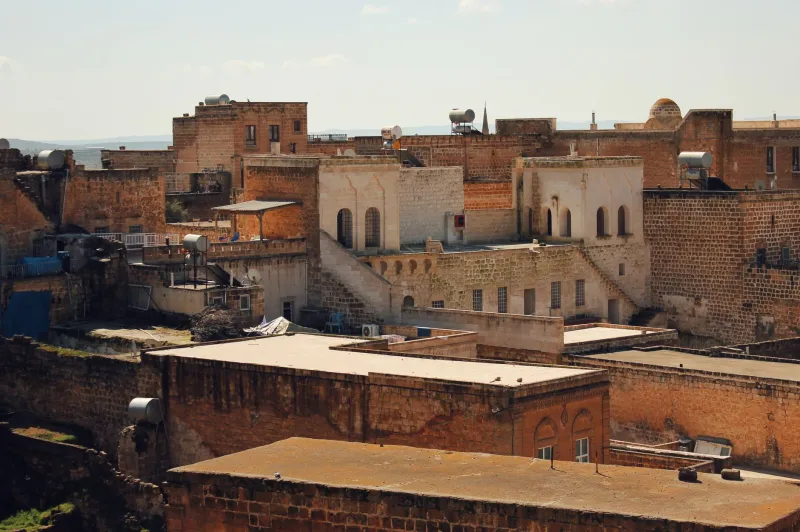
Let's be straight with you: Mardin is not Istanbul. It's not the Turkey that shows up in glossy travel magazines or gets filtered through a Western-friendly tourism lens. This ancient city — stacked in golden limestone along a ridge overlooking the Mesopotamian plains — runs on its own social logic, and that logic has been refined over centuries of Syriac, Arab, Kurdish, and Turkish coexistence. If you roll in with the same casual American directness you'd use back home, you're going to hit walls. Not hostile ones, necessarily — but walls all the same.
The good news? Once you understand what's actually happening beneath the surface of everyday interactions here, Mardin becomes one of the most genuinely warm and connective places you'll ever visit. The locals aren't cold — they're reading you just as carefully as you should be reading them.
The Tea Trap (And Why Refusing It Is a Bigger Deal Than You Think)
Americans are conditioned to decline politely. "Oh, no thanks, I'm good" is practically a reflex. In Mardin, that reflex will cost you.
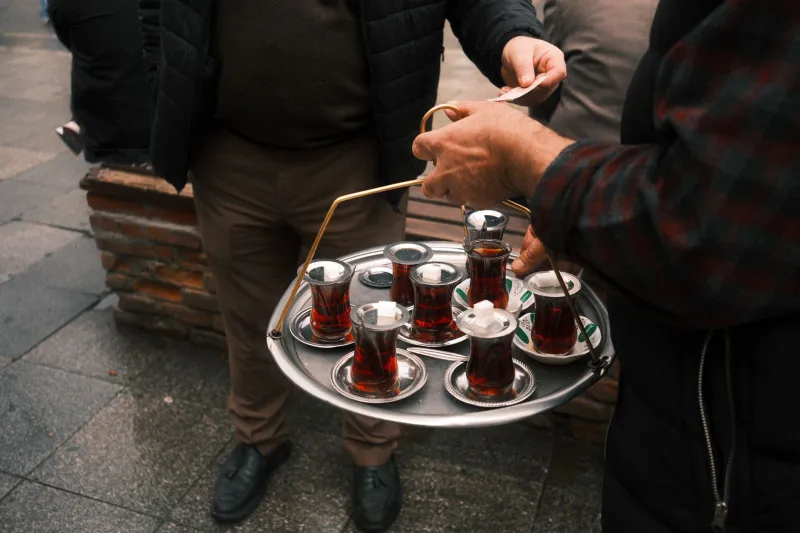
When a shopkeeper, a guesthouse host, or even someone you've just met on the street offers you çay — the small tulip-shaped glasses of black tea that flow constantly through this city — they are not just offering a beverage. They're opening a door. Declining, especially quickly or with a wave of the hand, reads as a rejection of the person, not just the drink.
You don't have to drink the whole thing. You don't even have to love tea. But sitting down, accepting the glass, and taking at least a few sips signals that you're present, that you're willing to slow down, and that you respect the rhythm of the interaction. In a city where genuine connection is built through unhurried conversation rather than transactional exchanges, that signal matters enormously.
Directness Is a Double-Edged Sword Here
Back in the States, being direct is a virtue. We value people who say what they mean, ask what they want, and don't waste anyone's time. In Mardin, that same directness can come across as aggressive, rude, or — at its worst — disrespectful.
Local social culture here is deeply rooted in indirectness as a form of courtesy. If someone doesn't want to do something, they'll rarely say "no" outright. They'll say "inshallah" (God willing), suggest it might be difficult, or simply redirect the conversation. Learning to read these soft deflections is crucial — especially if you're trying to make personal connections in the city.
On the flip side, locals may ask you questions that feel intrusive by American standards. Your age, your marital status, whether you have children — these aren't nosy intrusions here. They're conversational anchors, ways of placing you in a human context they can relate to. Answer warmly and honestly, and you'll find the conversation deepens fast.
Public Space and Personal Space Are Negotiated Differently
Mardin's old city is dense. The alleyways are narrow, the neighborhoods are layered, and the boundaries between public and private space are genuinely blurry in ways that can disorient American visitors.
In public spaces — particularly around the bazaar area, the old mosques, and the residential quarters — there's an understood code about eye contact. Prolonged eye contact with strangers, especially across gender lines, carries weight. It's not necessarily aggressive, but it's not neutral either. It communicates interest or challenge depending on context. If you're exploring solo, especially as a woman, being aware of where your gaze lands and how long it lingers will serve you well.
At the same time, physical proximity between people of the same gender is often much closer than American norms. Men may walk arm in arm. Women may hold hands in conversation. Don't misread these signals — they're expressions of friendship and trust, not romantic intent.
Hospitality Is an Obligation, Not a Performance
One of the most disorienting things for American visitors is realizing that what feels like extraordinary generosity here is often simply expected behavior. If you're invited into someone's home — and in Mardin, this happens more than you'd expect — the hospitality you receive isn't above and beyond. It's the baseline.
This creates a reciprocity pressure that Americans often miss. When you receive hospitality, the expectation isn't that you'll pay for it or tip for it (in fact, offering money can be deeply offensive in personal settings). The expectation is that you'll honor it — that you'll be present, engaged, complimentary, and gracious. Checking your phone, cutting the visit short, or acting distracted are all ways of disrespecting a gift that your host considers serious.
Bring something small if you're visiting someone's home — sweets, fruit, or a modest gift from your home city work well. And when you leave, express genuine gratitude. Not a quick "thanks, great time" but something that acknowledges the effort and warmth that went into the experience.
The Patience Factor: Stop Rushing Everything
Mardin moves slowly. Not because people are lazy or disorganized, but because relationships are considered more important than schedules. A conversation that runs long, a meal that stretches into hours, an evening that evolves without a fixed plan — these aren't inefficiencies. They're the point.
American visitors who are constantly checking the time, hurrying through meals, or treating every interaction as a transaction to be completed tend to leave Mardin feeling like the city was interesting but distant. The ones who surrender to the pace — even just partially — tend to leave with stories, phone numbers, and invitations they never expected.
If you have somewhere to be, give yourself more buffer time than you think you need. And if you don't have somewhere to be, consider letting the afternoon simply unfold.
A Few Practical Quick-Hits Before You Go
- Dress modestly near religious sites. This isn't just about mosques — the old city has churches and sacred spaces woven throughout. Covered shoulders and knees show respect.
- Learn five words in Arabic or Kurdish. Even a clumsy "merhaba" or "shukran" signals genuine effort and gets warm responses.
- Don't photograph people without asking. Especially older residents and women. A gesture and a smile go a long way as a request.
- Haggling is expected in the bazaar — but do it with good humor. Hard bargaining with a cold face is off-putting. Laugh, enjoy the back-and-forth, and don't lowball insultingly.
- Evenings are social time. If you want to connect with locals, the hours after sunset are when the city opens up. Don't retreat to your guesthouse too early.
Mardin rewards patience, humility, and genuine curiosity in ways that few cities can match. Get the social codes right, and this place will give you more than you came looking for.