Checked Your Assumptions at the Border? Why Most American Men Misread Mardin's Companionship Scene Entirely
Let's be honest. Most American men who land in Mardin for the first time have already built a mental picture of what the experience is going to look like. Maybe it's cobbled together from travel blogs, Reddit threads, or vague impressions of "the Middle East" that don't even apply to southeastern Turkey. Whatever the source, those preconceptions tend to create friction — sometimes embarrassing friction — the moment real interaction begins.
Mardin isn't Istanbul. It isn't a resort town on the Aegean. And it definitely isn't whatever generalized version of "Turkish culture" you've absorbed from a travel documentary. It's a layered, ancient city with its own social rhythms, its own unspoken agreements, and its own very specific way of deciding who gets access to genuine connection — and who doesn't.
So before you make the same mistakes that dozens of visitors make every season, let's unpack the biggest misconceptions head-on.
Misconception #1: Warmth Equals Availability
Mardin people are genuinely warm. That's not a stereotype — it's a lived reality. A shopkeeper will offer you tea before you've even glanced at his inventory. A stranger on the street will give you ten minutes of directions when you only needed one. A woman at a café might smile at you across the room with what feels, to American eyes, like unmistakable interest.
Here's the recalibration: warmth in Mardin is a cultural default, not a romantic signal. Turkish hospitality — especially in smaller, more traditional cities like Mardin — operates on a different frequency than American social interaction. In the US, sustained eye contact and a warm smile often do carry romantic undertones. In Mardin, they frequently mean nothing more than basic human courtesy.
Misreading this is one of the fastest ways to come across as presumptuous or even disrespectful. Slow down. Let interactions develop at their own pace. Warmth is the starting point of any connection here, not an invitation to accelerate.
Misconception #2: Gender Roles Are Simpler Than Back Home
Some American men arrive expecting Mardin's more conservative social landscape to mean that women are passive, deferential, or easy to impress with Western status. This is probably the single most condescending — and counterproductive — assumption a visitor can carry.
Mardin women, whether they're companions in a professional context or simply locals you meet through social settings, tend to be quietly confident and highly perceptive. They've spent their lives navigating a complex social environment that requires reading people quickly and accurately. They will clock your attitude within minutes.
If you walk in with the energy of someone who thinks he's doing a local woman a favor by paying attention to her, that energy will be felt immediately. The dynamic you're hoping to create will evaporate just as fast.
Respect here isn't performative — it has to be genuine. And genuine respect means acknowledging that the woman across from you has navigated social complexities that most American men wouldn't last a week inside.
Misconception #3: Money Fast-Tracks Everything
This one's worth addressing plainly, because it comes up in the companionship context specifically. Yes, Mardin has a real and active adult services scene. Yes, economic disparities exist between Western visitors and locals. But the assumption that financial leverage automatically translates into smoother, faster, or better interactions is a trap.
In practice, leading with money — being visibly flashy, name-dropping what you're willing to spend, or treating every interaction like a transaction waiting to be closed — tends to produce the worst outcomes. It attracts people who are only there for the transaction, and it repels people who might have offered something more genuinely enjoyable.
The visitors who report the most satisfying experiences in Mardin's companionship scene are almost universally the ones who approached things with patience and human curiosity first. The financial dimension, where it's relevant, takes care of itself when the interaction is built on something real.
Misconception #4: Language Is Just a Logistics Problem
Many American visitors treat the language barrier as a minor inconvenience — something to be solved with Google Translate and a loud, slow voice. What they miss is that language in Mardin carries enormous social weight.
Making even a minimal effort with Turkish — a proper greeting, a thank-you, an attempt to pronounce someone's name correctly — signals something important. It says you see this place as a real destination with real people, not a backdrop for your vacation. That signal travels fast in a city where locals are well-practiced at distinguishing curious visitors from entitled ones.
You don't need to be fluent. You need to be trying. There's a massive difference.
Misconception #5: The City Operates on Your Timeline
American visitors are, culturally, in a hurry. We optimize. We schedule. We feel vaguely anxious when things aren't moving toward a defined outcome. Mardin operates on a fundamentally different relationship with time — one that prizes the quality of a moment over its efficiency.
This shows up constantly in the companionship context. Conversations that feel like they're going nowhere are often doing important groundwork. A slow meal that seems to be delaying the point is the point. Rushing signals disrespect for the person you're with, and in a city where word travels quickly through tight social networks, a reputation for impatience is one you don't want.
The visitors who genuinely connect in Mardin — who leave with stories worth telling — are the ones who surrendered to the city's pace instead of fighting it.
What Genuine Connection Actually Looks Like Here
Strip away the misconceptions, and what's left is actually pretty simple: Mardin rewards curiosity, patience, and authentic respect. It punishes entitlement, impatience, and the kind of shallow cultural tourism that treats people like amenities.
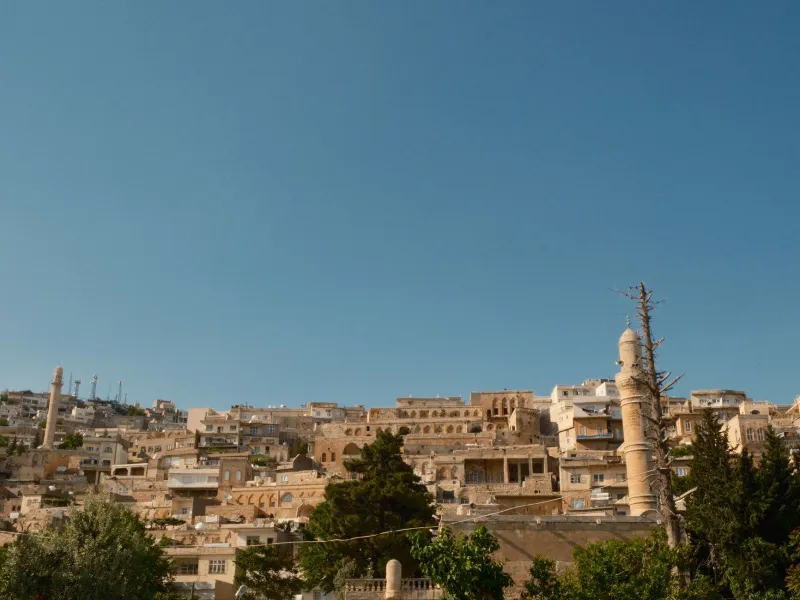
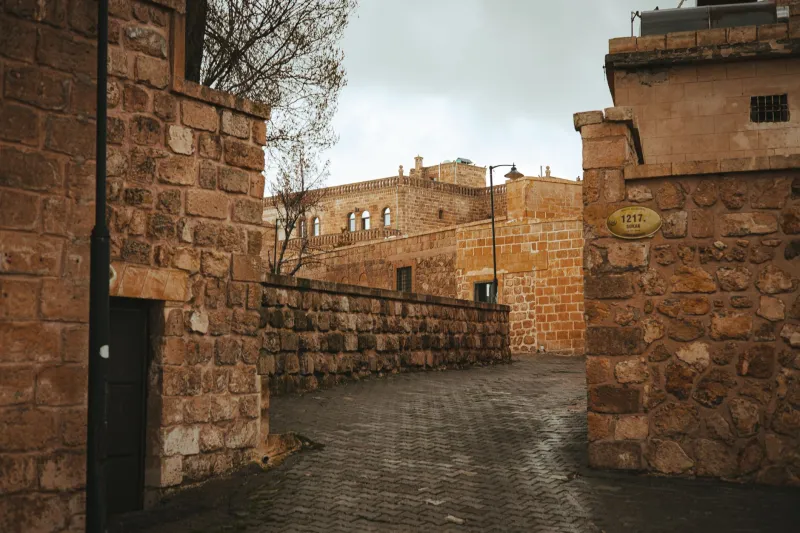
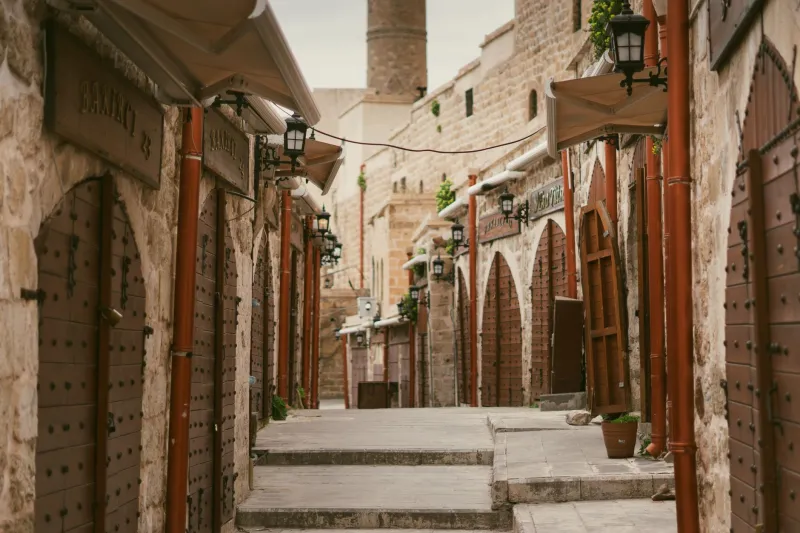
The city has been a crossroads for thousands of years — Assyrian, Arab, Kurdish, Turkish, Armenian influences layered on top of each other in the limestone architecture and the food and the way people speak. The people who live here have a finely tuned sense for who is actually interested in them versus who is just passing through and looking for a service.
Be the kind of visitor who's actually interested. Ask questions you don't already know the answer to. Sit with the discomfort of not being in control of how an interaction unfolds. Let Mardin show you what it wants to show you, rather than demanding the experience you came here expecting.
That's when the city — and the people in it — actually open up.