Generosity Without a Price Tag: The Real Story Behind Turkish Hospitality in Mardin

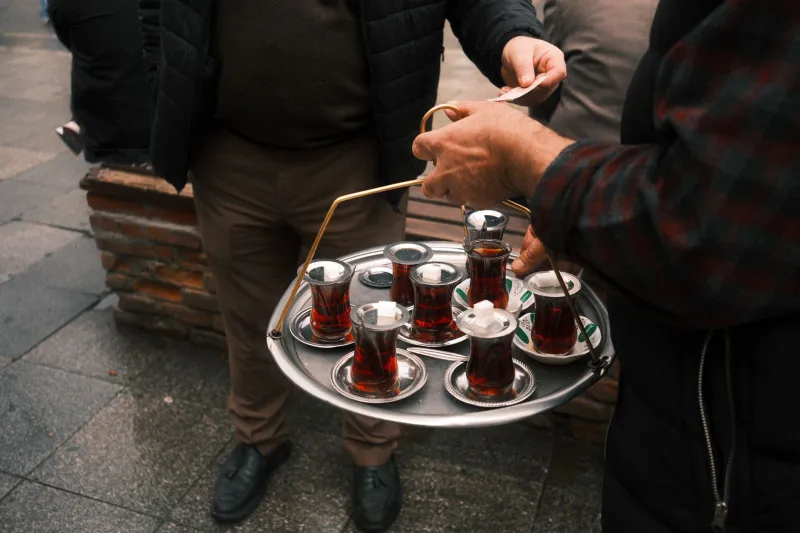
There's a moment that happens to almost every American who spends real time in Mardin. You're sitting in a small tea house, maybe you've just finished a conversation with a local shopkeeper or a new companion you met through the community, and suddenly a small glass of çay appears in front of you — unsolicited, unprompted, and completely free. You look around, slightly confused, wondering what's expected of you in return.
The honest answer? Absolutely nothing. And that's exactly what trips most Americans up.
We're wired to look for the transaction. Back home, generosity usually comes with a context — a business lunch, a first date, a favor being set up. In Mardin, hospitality is its own complete act. It doesn't need a reason, and it doesn't create a debt. Once you genuinely absorb that truth, your entire experience in this city shifts.
The Misconception Americans Carry Through the Gate
A lot of visitors from the States arrive with a mental model borrowed from tourism clichés — the idea that friendliness from locals is either a sales tactic or a cultural performance put on for outsiders. It's understandable. That version of hospitality does exist in heavily touristed places. Mardin, though, operates by a different set of rules.
The Arabic and Kurdish communities that have shaped this city for centuries carry a concept called ikram — the act of honoring a guest through giving. It's not about impressing anyone. It's about expressing dignity, both yours as a host and theirs as a guest. When a local insists you take the better seat, or waves off your attempt to pay for coffee, they're not being strategic. They're being themselves.
Mistaking this for manipulation is one of the fastest ways to build a wall between yourself and the people you're hoping to connect with — whether that's a guide, a dinner companion, or someone you've met through Mardin Companions.
What Authentic Hospitality Actually Looks Like on the Ground
Forget the glossy travel magazine version for a second. Real hospitality in Mardin tends to show up in small, unannounced moments.
A companion you've arranged to meet for an evening walk might show up with a bag of fresh figs from her neighborhood market — not because it's romantic, but because that's just what you bring. A local contact might spend twenty minutes drawing you a hand-sketched map of the old city rather than just texting you a Google Maps link, because in-person guidance is considered more respectful than a digital shortcut.
There's also the phenomenon of misafirperverlik — a Turkish word that roughly translates to "guest-friendliness" but carries a weight that the English phrase doesn't quite capture. It implies a full commitment to the comfort and happiness of whoever is in your presence. You'll feel it when someone goes out of their way to make sure you understand the menu, or when a conversation partner patiently repeats themselves in slower, clearer Turkish because they want you to actually follow along.
These gestures aren't performances. They're expressions of a deeply held value system that has survived in Mardin across centuries of shifting empires and cultures.
The Reciprocity Trap (And How to Avoid It)
Here's where a lot of well-meaning Americans stumble: they want to reciprocate immediately and in kind. Someone buys you tea, so you insist on buying the next round. Someone gives you a small gift, so you panic and try to find something equivalent to give back on the spot.
This impulse, while coming from a genuinely good place, can actually undermine the dynamic. In Mardin's hospitality culture, rushing to "balance the ledger" signals that you're treating the exchange as a transaction rather than a human moment. It can subtly communicate distrust — as if you're uncomfortable being in someone's debt, which implies you don't fully trust their motives.
The more culturally fluent move is to receive graciously and reciprocate thoughtfully over time. Accept the tea with genuine thanks. Compliment the choice. Engage fully in the conversation that follows. If you want to give something back, do it later and make it personal — a small item from home, a handwritten note, or simply showing up to the next meeting with the same level of warmth and presence.
Practical Ways to Show Up Right
If you're visiting Mardin and want to engage with local hospitality culture authentically — whether you're meeting someone through our platform or just exploring the city — a few practical shifts in mindset go a long way.
Slow down your yes. In American social culture, we often say "you didn't have to do that" as a reflex. In Mardin, that phrase can land as criticism. Instead, try a simple, warm "thank you" and let the moment breathe.
Bring something small when you visit. If you're invited to someone's home or a more private gathering, arriving with a box of sweets (lokum, baklava, or something from a local pastry shop) is a deeply appreciated gesture. It's not about the value of the item — it's about the thought of arriving as a giver rather than just a receiver.
Don't rush the preamble. Americans tend to get to the point quickly. In Mardin, the first fifteen minutes of any meeting are often spent on pleasantries, family check-ins, and general conversation before anyone gets to "business." Honoring that rhythm signals respect.
Use first names carefully. Depending on the age and background of the person you're with, jumping straight to first-name basis can feel presumptuous. Pay attention to how your companion introduces themselves and mirror their lead.
Why This Matters for Real Connections
Mardin Companions exists to help people find genuine human connection in one of the most layered, historically rich cities in the region. But the platform is only part of the equation. The other part is you showing up with cultural awareness and real curiosity.
The people you'll meet here — companions, locals, guides, community members — are embedded in a hospitality tradition that's older than most American cities. When you engage with that tradition honestly, rather than filtering it through suspicion or rushing past it toward the "main event," you access a depth of connection that most tourists never find.
Mardin doesn't give itself up to visitors who are in a hurry. But for those willing to sit with the tea, accept the fig, and let a conversation go wherever it naturally goes — this city opens in ways that are genuinely hard to describe until you've felt it yourself.